

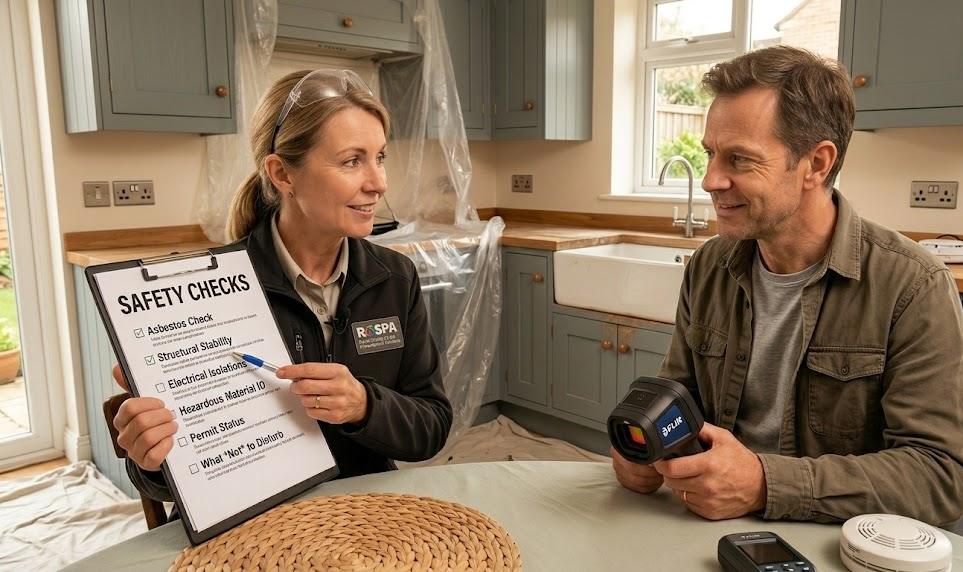
Many homeowners spend a lot of time choosing paint colours, picking tiles, and looking for design ideas. However, an important question often gets overlooked: Is this home safe to renovate?
Failing to assess your home’s safety first can lead to costly mistakes. Hidden problems with the structure or past work that doesn’t meet regulations can delay a project. By checking your home’s condition upfront, you lay a strong foundation for your renovation.
The risks are more than just delays. According to HSE, around 3,000 people in Great Britain die each year from illnesses related to hazardous exposures like asbestos, frequently found during home renovations. This highlights the necessity of treating the preparation phase with the same rigor as the construction itself.
This guide lists seven key safety checks to do before the builders start. These simple steps will help you manage your project and protect your investment from the beginning.
At RMK Design, we help you plan and improve your property with practical ideas and expert advice.
Key Safety Checks to Make Before Home Renovation
Here are the seven key safety checks to make before your home renovation:
1. Check Your Load-Bearing Walls
Many people want open-plan living spaces. Taking down a wall to connect a kitchen and dining room can change a home for the better. However, you need to be careful when removing a wall.
A recent KBB Focus report found that 53% of UK homeowners renovating live in homes built before 1940. These older homes mostly have load-bearing walls that may not be clearly marked on blueprints. The structure of older houses can differ greatly from what they appear to be. Therefore, it is essential to have a professional assess the property.
First, decide whether the wall is load-bearing or not. A structural engineer can help you determine which walls hold up the floors and roof. If you take down a load-bearing wall without the right support, you could cause serious damage to your home. Try to always get written confirmation before removing a wall. If a wall is going down, make sure you install a steel beam or RSJ properly.
2. Check the Age and Condition of Electrical Wiring
Older properties have outdated wiring that does not meet today’s safety standards. For example, rubber-sheathed wiring from the 1960s and 1970s can become brittle over time, posing a fire hazard.
Before you begin any renovation, hire a registered electrician to carry out an Electrical Installation Condition Report (EICR). This report illustrates what needs to be upgraded before work begins. It is easier and less expensive to rewire during a remodel than to do it after the walls and flooring are finished.
3. Identify Hazardous Materials in the Structure
Many homes built before the year 2000 contain materials that are best left undisturbed unless managed by professionals. Before you start pulling down old partition walls or stripping back textured ceiling finishes, it is wise to have a survey completed.
Companies like advanceasbestosremoval.co.uk can provide the necessary testing and safe removal services to ensure your renovation starts on a safe footing. This prevents accidental exposure and ensures your site stays compliant with safety standards.
Common places you might find asbestos include the following:
- Artex ceilings
- Floor tiles
- Pipe insulation
- Garage roofing
A professional survey will determine what is there and recommend the safest course of action.
4. Inspect for Damp and Timber Rot
Moisture damage is usually hidden until a remodel starts and a contractor removes a piece of plasterboard. Rising damp, penetrating damp, and condensation can all cause serious structural damage if not fixed.
Before starting any work, assess windows, exterior walls, and skirting boards for signs of damp or rot. A damp specialist can offer a thorough inspection. Addressing moisture problems now can prevent unpleasant surprises, like rotten joists or crumbling plaster, during a kitchen remodel.
5. Get Gas Safety Signed Off
If you are moving a gas cooker, relocating a boiler, or extending a kitchen, you will need to change the gas pipe. This kind of work must be carried out by an engineer registered with the Gas Safe Register.
Before any work starts, ask to see their Gas Safe ID card. Unlicensed gas work is often dangerous and can void your home insurance. Make sure to get written certification, as you will need it for future property sales.
For clearer guidance on what to expect when installing a gas appliance, take a look at this practical guide to new gas appliance installation and certification.
6. Test for Lead Paint in Older Properties
Homes built before 1970 may have lead-based paint hidden under newer paint layers. Activities like sanding, stripping, or drilling painted surfaces can release lead particles, which are mainly dangerous for children. Before starting any sanding or surface work, it’s important to check for lead paint. Ignoring this step can lead to serious health risks.
You can find lead paint testing kits at local DIY or hardware stores, and they are usually inexpensive. If the test shows lead paint, it’s safer to hire a professional to remove it than to sand it yourself.
7. Confirm If Building Regulations Apply
Permitted development rights allow you to make some changes to your property without needing planning permission. However, most structural changes still require building regulations approval. This includes:
- Extensions
- Loft conversions
- Removing walls
- Altering drainage or heating systems
If you skip this essential step, it could cause problems when you sell your property. A building regulations certificate confirms that the work was carried out correctly. Before starting any work, assess with your local authority’s building control department or hire an approved inspector.
A Practical Tip for Families: Create a Safe Zone
If you have children or pets at home during the remodel, set a clear safe zone away from the work areas. Use temporary barriers to keep living spaces separate from the construction. Make sure everyone in the household understands the boundaries. A little planning now will help prevent accidents and keep the site safe for everyone involved.
| Quick Safety Checklist: |
Conclusion
Remodelling a home is a worthwhile investment. While choosing designs is exciting and seeing the final result is satisfying, the preparation done before starting work is what truly affects the project’s success.
Before any renovation begins, ensure to complete these seven safety checks. Schedule necessary surveys, get official reports, and confirm the credentials of every specialist. This will create a clear plan for the weeks ahead.
Think of this preparation as a protective measure, not a delay. Doing this due diligence keeps the remodel on track and within budget. It ensures it meets your expectations without any surprises.If you are planning a renovation and would like expert guidance on where to start, get in touch with us.

